Department of Home Affairs
Mapping who shapes smart cities and cyber security across the Mekong, and where Australia can help
The Department of Home Affairs asked us to find out who is shaping smart cities and critical technology in Cambodia, Laos, Thailand and Vietnam, and where Australia could help. We read widely, spoke with eight experts across the region, and turned what we learned into five stakeholder maps and a simple way to compare how ready each country is. The research was designed to guide two proposed Australian aid programs for safer smart cities in the Mekong.
Outcomes
- A picture of the smart city and critical technology landscape across the region, plus a profile of each of the four countries
- Five stakeholder maps showing who leads, who influences and who advises, across government, industry and research
- A scorecard for rating how mature each country's cyber security is, using 17 measures drawn from trusted global indices
- Three focus areas and three ways of working to guide the Department's future investment, matched to each country's needs
- Early insights to shape two proposed aid programs for safer smart cities in the Mekong
A region moving fast, and a department that needed a clear view
Cities across the Mekong are going digital. Governments in Cambodia, Laos, Thailand and Vietnam have put smart cities and digital services at the heart of their national plans. Smart cities run on what governments call 'critical technology': the current and emerging technologies that can help or harm a country's interests. The pandemic pushed everyday life online even faster. At the same time, cyber crime coming from and aimed at the region is growing, and there is little money or expertise to defend against it.
The Department of Home Affairs wanted to understand this before deciding how Australia should get involved. Who is leading smart city work in each country? Where are the security gaps? And where could Australian government, business and research partners be useful? The work supports Australia's International Cyber and Critical Technology Engagement Strategy.
Wide reading, eight conversations and a home-made scorecard
We started with a wide scan of reports, news, government papers and academic work about critical technology and smart cities in the four countries. We made a point of looking for local voices that are harder to find. Then we tested what we were reading in eight interviews with people from industry, universities, civil society, Australian Government agencies and other aid donors, in Australia, Thailand, Vietnam and Cambodia.
Working with the Department's team, we sorted everything under three themes: security, technology and society. We also built a scorecard with 17 measures to rate how mature each country's cyber security is. It draws on the Global Forum on Cyber Expertise and on indices from the International Telecommunication Union, the World Economic Forum and USAID, so the four countries could be compared fairly.
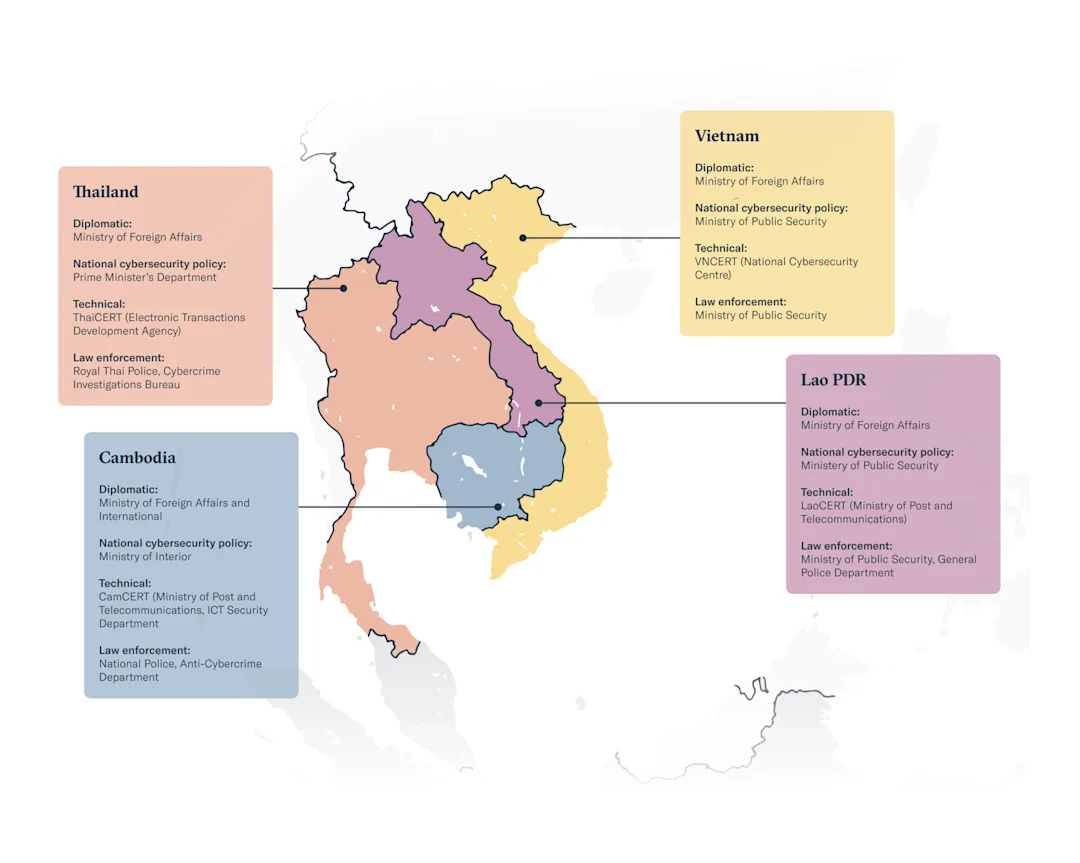
The four countries in the study, with the government bodies responsible for diplomacy, cyber security policy, technical standards and law enforcement in each.
Making a complicated picture easy to read
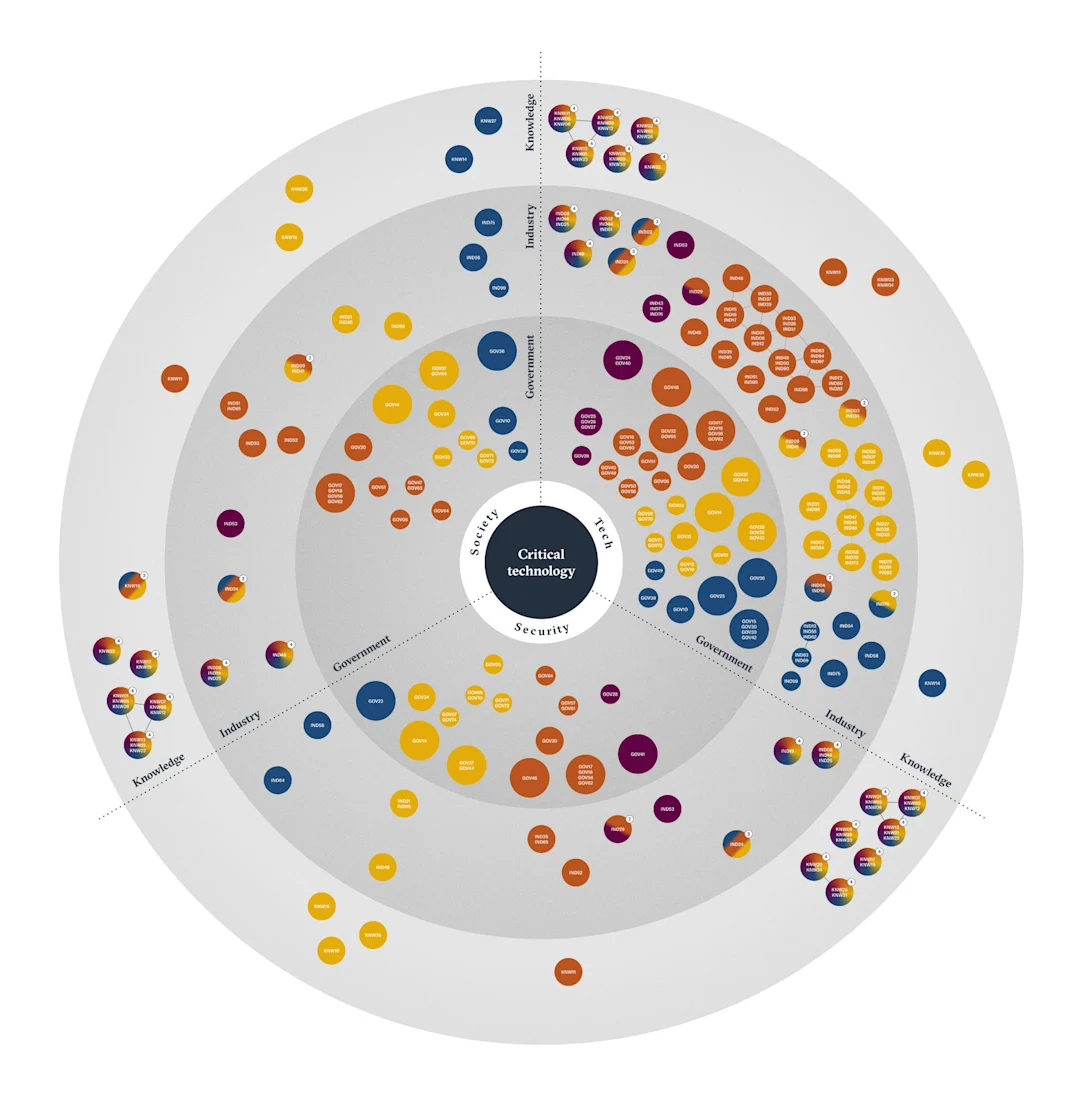
The most useful outputs were visual. We designed five stakeholder maps, one for the region and one for each country. Each map plots government, industry and research organisations across the three themes. Each organisation is placed by how much influence it has and how involved it is. That means the Department can see at a glance who leads, who has influence from a distance, and who advises without much power.
The maps sit alongside a profile of each country. The profiles describe how mature each country's cyber security is, what is holding it back, and which gaps are most worth closing. Together they give the Department a shared, evidence-based picture of the region to take into conversations with partners in each country.
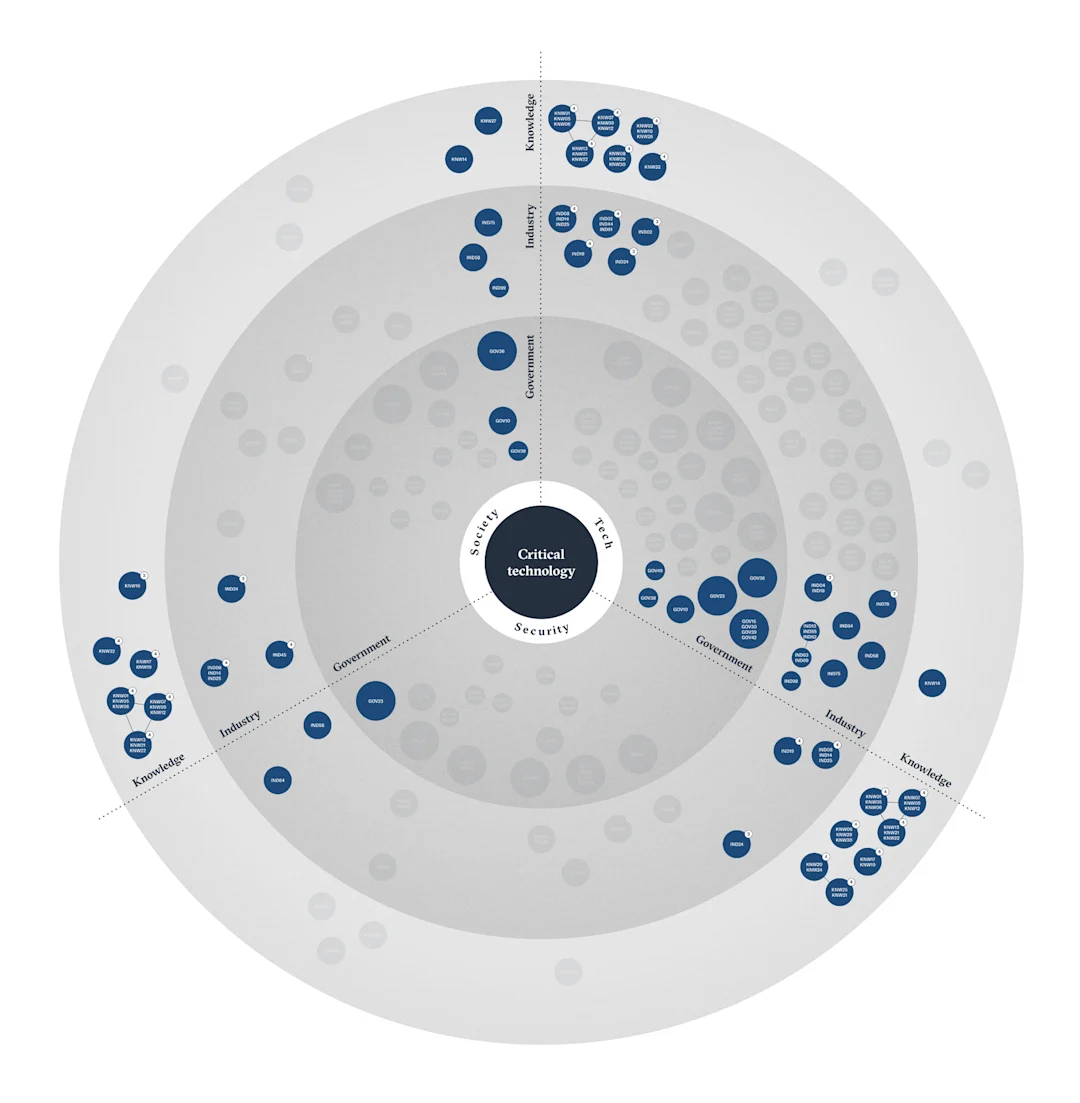
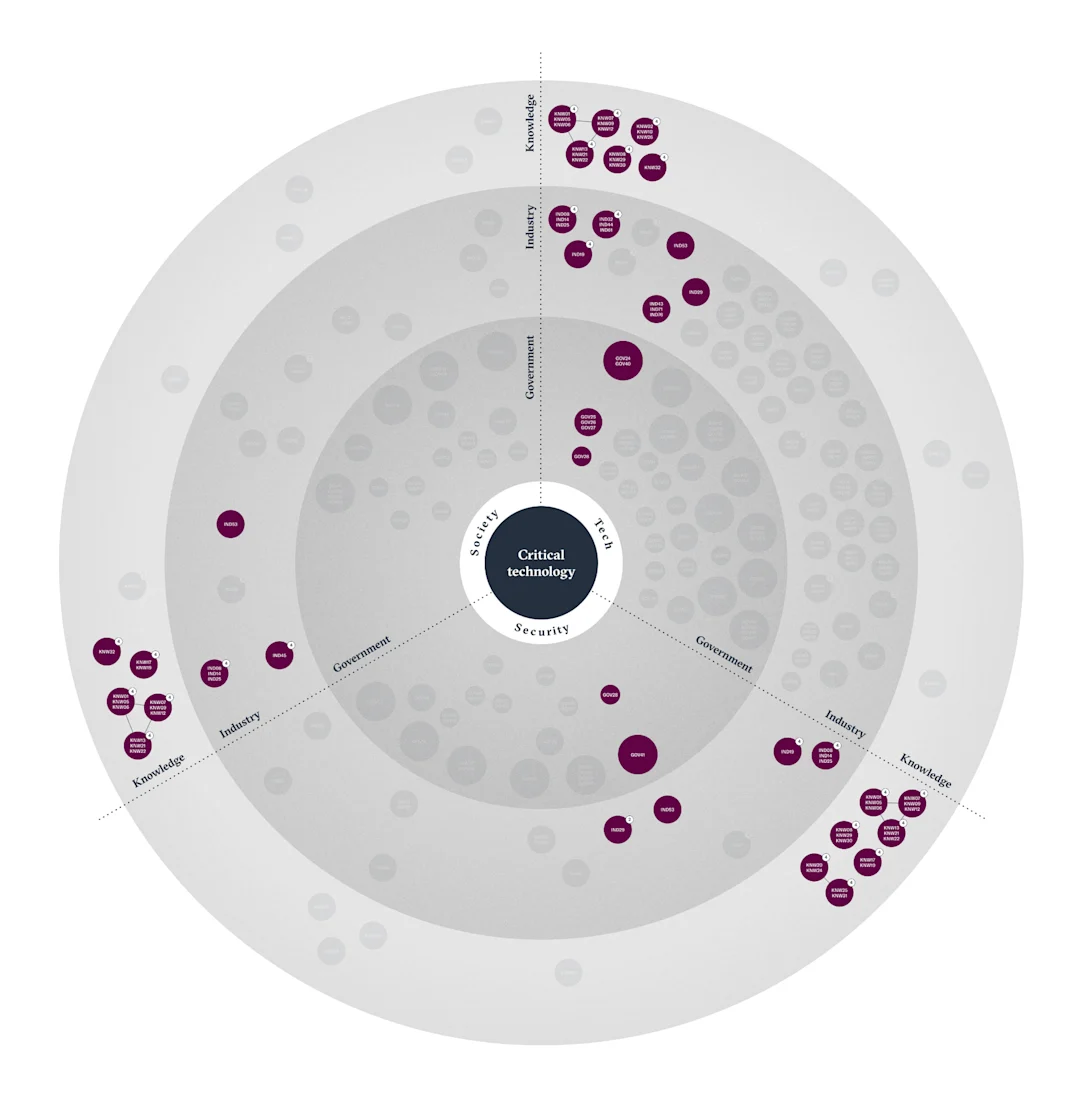
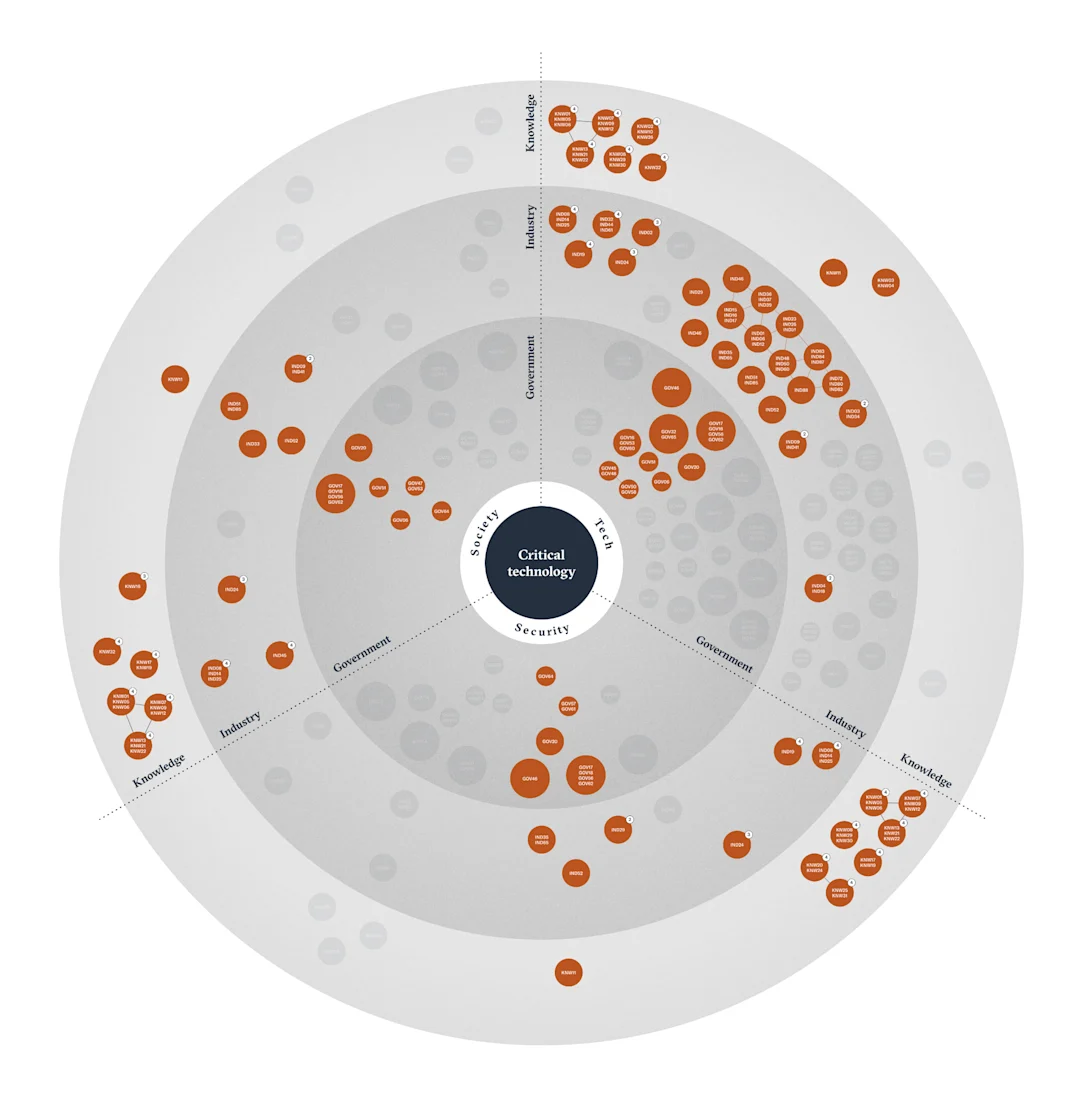
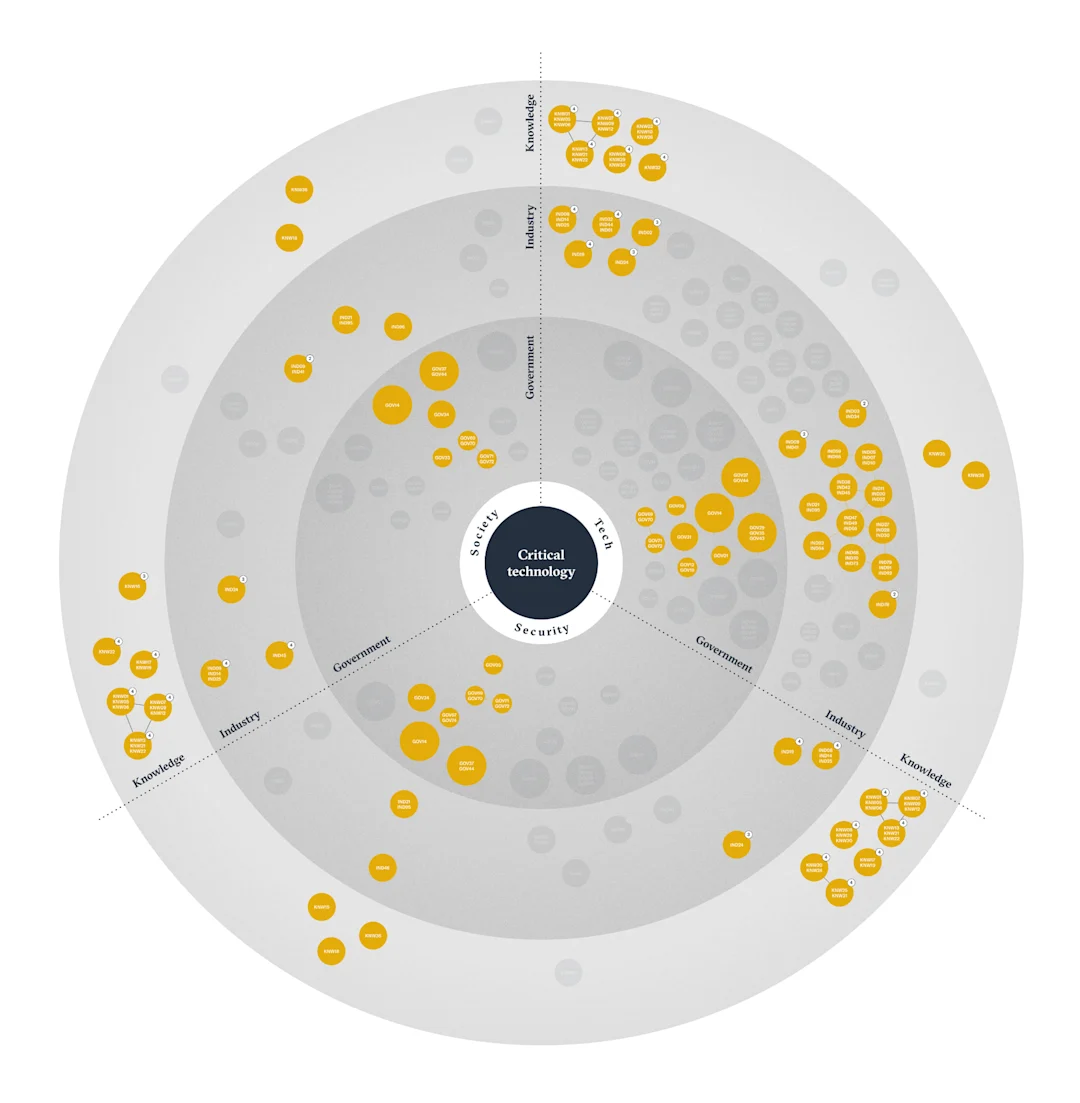
Stakeholder maps for Cambodia, Laos, Thailand and Vietnam. Each dot is an organisation. Its position shows how much influence it has and how involved it is in critical technology, across government, industry and research.
What we found
The four countries are at very different points. Thailand and Vietnam lead the region in using smart city and emerging technology. Cambodia's cyber security was rated the least mature, and Laos, a landlocked developing country, has the furthest to go. Everywhere, gaps in digital skills and infrastructure hold progress back, and competing priorities pull attention away from security.
Data rules are a sensitive area. Thailand and Vietnam require data collected in their country to be stored there, and international human rights groups have criticised both governments' approaches to privacy and online speech. We suggested the Department follow those debates through diplomatic channels, and put its own money into less contested areas: standards, skills and digital identity, the secure way people prove who they are online.
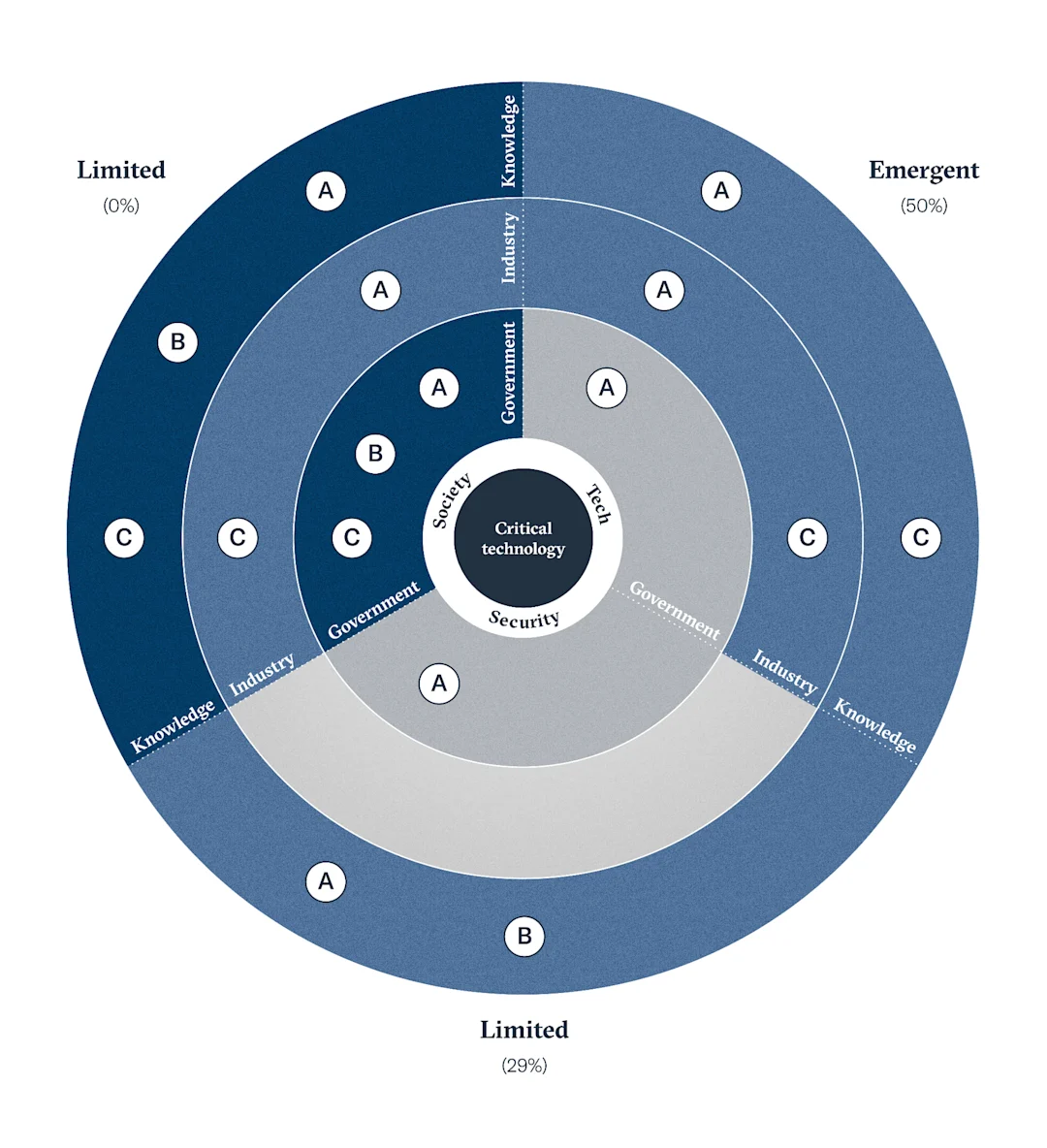
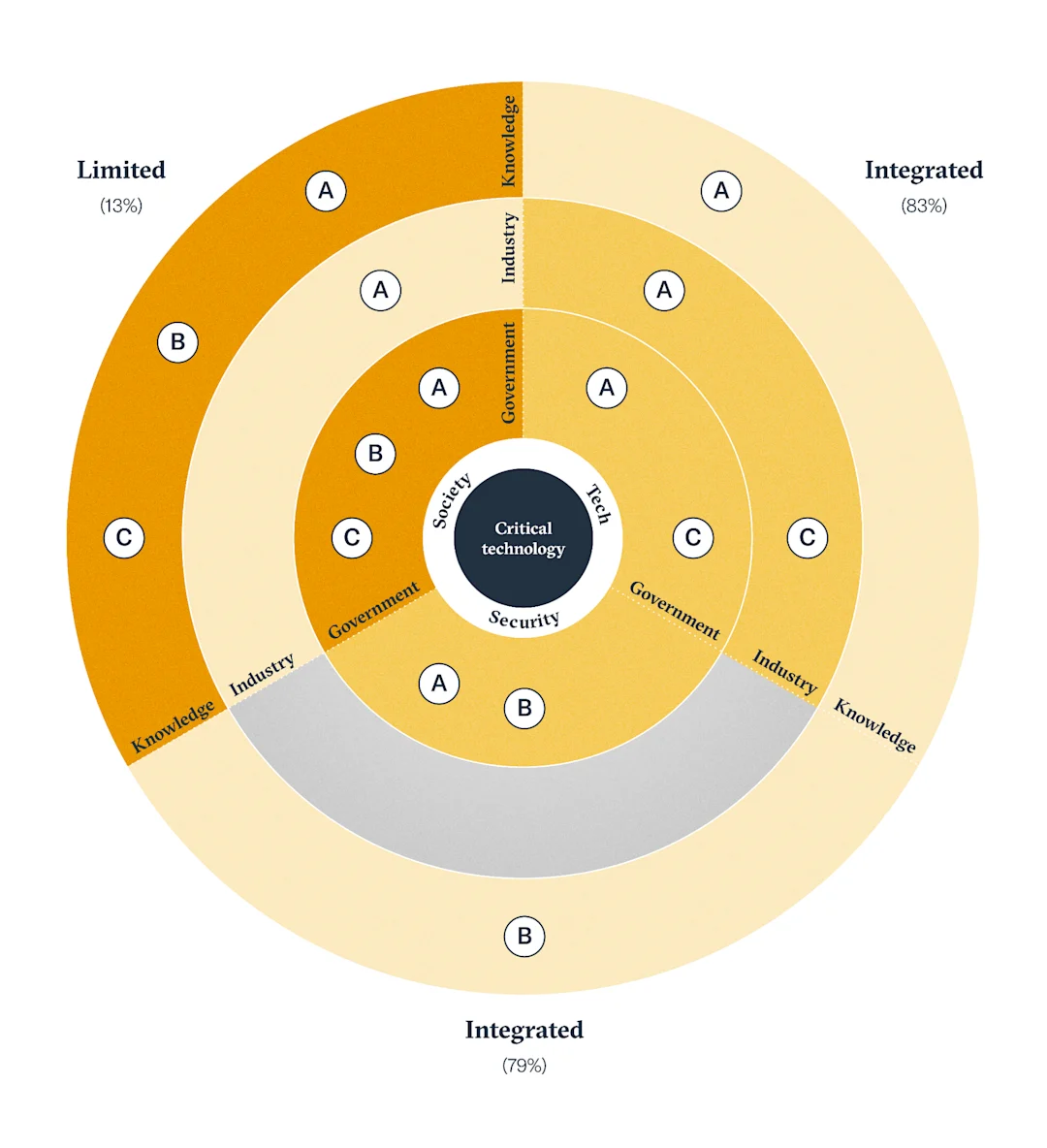
Country profiles match each country's gaps to the ways of working most likely to close them: building specific skills (A), working through Australian government partners (B), and bringing in Australian businesses and organisations (C). Cambodia is on the left, Vietnam on the right. Darker segments show where more effort is needed.
Country profiles match each country's gaps to the ways of working most likely to close them: building specific skills (A), working through Australian government partners (B), and bringing in Australian businesses and organisations (C). Cambodia is on the left, Vietnam on the right. Darker segments show where more effort is needed.
Where Australia can help
We identified three focus areas for future investment. First, stronger cyber security plans, institutions and infrastructure. Second, better core networks, and a stronger ability to check that technology meets agreed standards. Third, easing the impact of changing approaches to cyber security and data privacy, starting with digital identity.
For each country we matched these to three ways of working: building specific skills, working through Australian government partners such as the Australian Cyber Security Centre and Standards Australia, and bringing in Australian businesses and universities to meet each country where it is. The report and maps were designed to guide two proposed aid programs: Resilient Smart Cities in the Mekong, and Standards Engagement to Support Resilient Smart Cities in the Mekong.